

FDA Food Dye Ban: What the 2025 Regulatory Action Means for Consumers
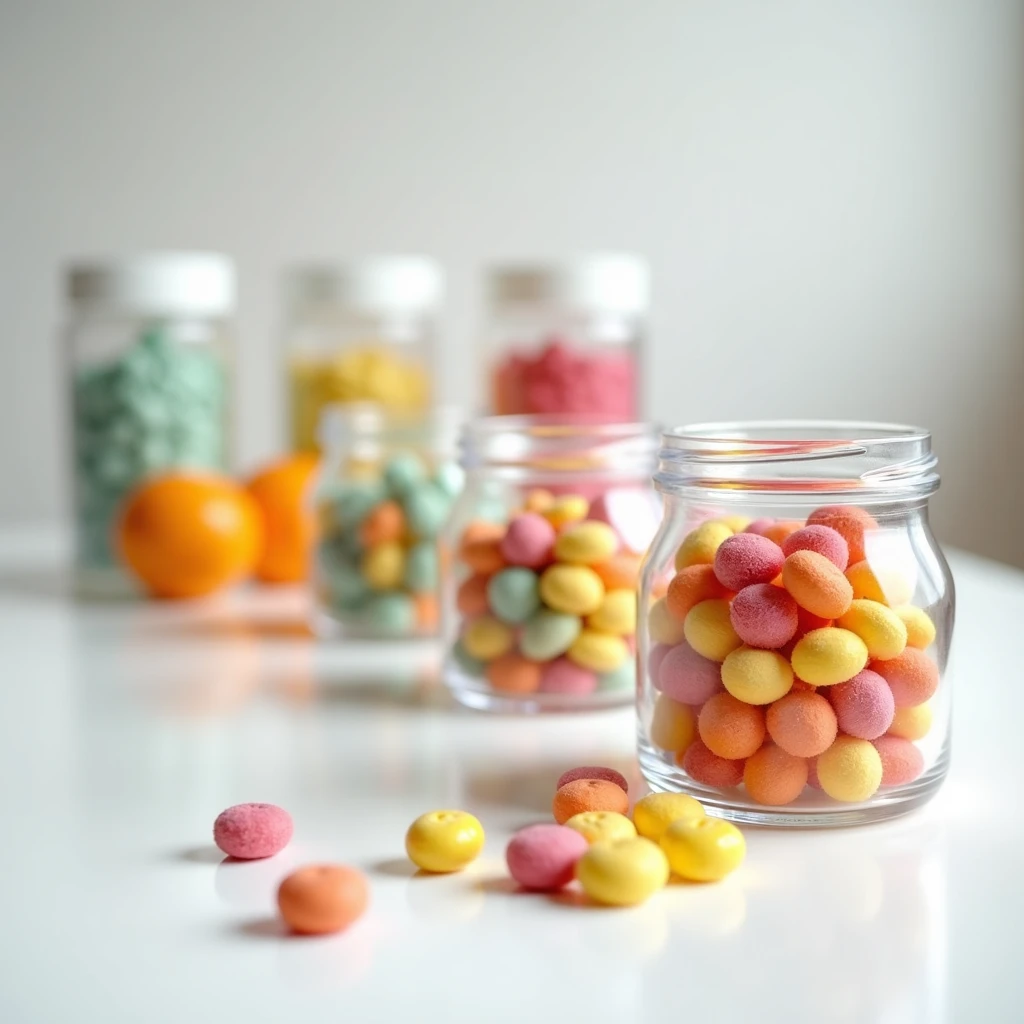
"The presence of synthetic dyes in the food supply has been a subject of regulatory scrutiny for decades, but toxicological evidence—not headlines—should guide consumer decisions."
FDA Center for Food Safety and Applied Nutrition, 2025
On January 15, 2025, the U.S. Food and Drug Administration announced a regulatory action removing two synthetic food colorings from the certified list while calling for a voluntary industry phase-out of six additional dyes over the next 24 months. The decision follows years of petitions from consumer advocacy groups and renewed attention to European Union restrictions on synthetic colorants. Red 3 (erythrosine) and Orange B were officially decertified, while Yellow 5, Yellow 6, Red 40, Blue 1, Blue 2, and Green 3 remain approved pending voluntary reformulation by manufacturers.
For consumers navigating supplement labels and processed foods, the announcement raises immediate questions: what does the evidence actually show about these compounds, which products are affected, and how should purchasing decisions change—if at all? This brief examines the toxicological data underlying the FDA action, the practical implications for supplement users, and the criteria that matter when evaluating products in the transition period ahead.
What Are Synthetic Food Dyes?
Synthetic food dyes are petroleum-derived color additives manufactured through chemical synthesis, as distinct from naturally occurring pigments extracted from plants, minerals, or animal sources. The FDA certifies these compounds under the Federal Food, Drug, and Cosmetic Act, assigning each an FD&C (Food, Drug, and Cosmetic) number following toxicological review. Nine synthetic dyes have been approved for use in the United States since the 1960s, down from more than 80 in the early 20th century.
These additives serve no nutritional or preservative function. Their sole purpose is aesthetic—enhancing visual appeal in candy, baked goods, beverages, dietary supplements, and pharmaceutical tablets. The coal-tar dyes of the early 1900s were replaced by azo compounds and triphenylmethane derivatives synthesized from petrochemical precursors. Each certified batch receives a lot number and purity testing by the FDA before commercial distribution.
The regulatory framework distinguishes between dyes (which dissolve in liquid) and lakes (dye molecules bound to calcium or aluminum salts to create water-insoluble pigments). Both forms appear throughout the food supply, with lakes more common in fat-based products and coatings. The January 2025 action affects only synthetic certified colors—natural alternatives like beet juice, turmeric, and spirulina extract remain unregulated as color additives.
What the FDA Action Changes
The immediate regulatory change removes Red 3 and Orange B from the certified color list, effective March 1, 2025. Manufacturers have 180 days to exhaust existing inventory, after which products containing these dyes cannot legally enter interstate commerce. Red 3—erythrosine, a cherry-red colorant used primarily in candy, maraschino cherries, and some vitamin tablets—was the primary target. The compound has been banned in cosmetics since 1990 following animal studies linking high-dose exposure to thyroid tumors in male rats.
The voluntary phase-out recommendation for six remaining dyes carries no enforcement mechanism. Yellow 5 (tartrazine), Yellow 6 (sunset yellow), Red 40 (allura red), Blue 1 (brilliant blue), Blue 2 (indigotine), and Green 3 (fast green) remain FDA-approved. The agency issued guidance encouraging reformulation with natural alternatives but set no compliance deadline and outlined no penalties for continued use. This creates a two-tier system: banned compounds with legal consequences, and discouraged compounds subject only to market pressure.
- Red 3 (erythrosine): Banned outright; 180-day inventory grace period
- Orange B: Banned outright; limited prior use in hot dog casings
- Yellow 5, Yellow 6, Red 40: Voluntary phase-out recommended; remain legal indefinitely
- Blue 1, Blue 2, Green 3: Voluntary phase-out recommended; remain legal indefinitely
- Natural color additives: Unaffected; no regulatory change
Evidence and Mechanisms Behind the Decision
The FDA based its Red 3 decertification on a 1990 National Toxicology Program study showing thyroid follicular cell adenomas in male Sprague-Dawley rats exposed to 4% dietary erythrosine for two years—a dose roughly 100,000 times higher than typical human exposure from food. The mechanism involves iodine release during erythrosine metabolism, which disrupts thyroid hormone synthesis and triggers compensatory follicular hyperplasia. No human epidemiological data have replicated this finding, and the FDA's own 2016 risk assessment concluded that current exposure levels pose negligible cancer risk at consumption levels below 0.1 mg/kg body weight per day.
A 2021 systematic review of synthetic food dyes and neurobehavioral outcomes found that while Yellow 5 and Red 40 showed statistically significant associations with hyperactivity in meta-analysis, effect sizes were small (standardized mean difference 0.18-0.23) and heavily influenced by parental report bias in non-blinded trials.
The voluntary phase-out of the remaining six dyes reflects political pressure rather than new toxicological findings. Yellow 5 has been associated with urticaria and angioedema in aspirin-sensitive individuals, mediated by cross-reactivity with salicylate metabolites, but prevalence estimates range from 0.01% to 0.1% of the general population. Red 40 generated controversy following a 2007 University of Southampton study linking a mixture of dyes and sodium benzoate to increased hyperactivity scores in children, but subsequent replication attempts produced inconsistent results and failed to isolate individual dye effects.
Blue 1 and Blue 2 carry theoretical genotoxicity concerns based on in vitro chromosomal aberration assays, but in vivo rodent studies have not confirmed mutagenic potential at dietary exposure levels. The European Food Safety Authority re-evaluated all six compounds between 2009 and 2016, maintaining approval while reducing acceptable daily intake levels for Yellow 5 (from 7.5 to 4 mg/kg) and Red 40 (from 7 to 4 mg/kg) based on updated body weight assumptions rather than new hazard data. The divergence between U.S. and EU policy reflects risk management philosophy—Europe applies precautionary principle restrictions even without definitive harm evidence, while the FDA requires demonstrated risk before withdrawal.

Clinical Considerations
Individuals with Aspirin Sensitivity
Yellow 5 (tartrazine) cross-reacts with aspirin in approximately 10-15% of aspirin-sensitive asthmatics, triggering urticaria, angioedema, or bronchospasm within 30 minutes to 2 hours of ingestion. The mechanism involves inhibition of cyclooxygenase-1 and leukotriene pathway activation. Patients with confirmed aspirin-exacerbated respiratory disease should avoid Yellow 5-containing supplements and verify reformulation status with manufacturers during the transition period.
- Check supplement facts panels for FD&C Yellow 5 or tartrazine
- Request certificates of analysis confirming natural colorant substitution
- Be aware that "natural flavors" may still include Yellow 5-derived compounds
Children with Attention Disorders
Parental concerns about food dyes and behavioral outcomes have driven regulatory petitions since the Feingold diet hypothesis emerged in the 1970s. Current evidence shows modest, inconsistent associations between synthetic dye consumption and hyperactivity measures, with effect sizes too small to guide clinical treatment decisions. A 2012 meta-analysis of 24 controlled trials found that dye elimination improved parent-rated hyperactivity scores by 0.21 standard deviations—detectable statistically but below clinical significance thresholds.
- Elimination trials removing all synthetic dyes for 4-6 weeks may identify responders
- Blinded reintroduction challenges reduce placebo effects in assessment
- No evidence supports dye restriction as monotherapy for ADHD
Supplement Users on Restricted Diets
Individuals following kosher, halal, or vegan protocols should note that dye lakes—pigment molecules bound to metal salts—may contain aluminum or calcium compounds derived from animal bone char. The voluntary phase-out creates labeling ambiguity during the 24-month transition as manufacturers reformulate. Natural alternatives like carmine (derived from crushed cochineal insects) introduce their own dietary restriction issues.
- Contact manufacturers directly for sourcing documentation during reformulation
- Third-party certifications (kosher, vegan) may lag formula changes by 6-12 months
- Colorless or naturally pigmented supplements avoid these classification issues entirely
How to Choose Supplements During the Transition
- Verify current formulation status: Contact manufacturers to confirm whether products still contain Red 3 or have transitioned to natural colorants; batch-to-batch variation is common during reformulation periods
- Prioritize function over appearance: Synthetic dyes serve no therapeutic purpose; colorless tablets, clear capsules, or naturally pigmented formulas deliver identical nutritional content without regulatory uncertainty
- Request certificates of analysis: Third-party testing documentation should confirm absence of delisted dyes and verify natural colorant identity; "natural color" claims require substantiation
- Understand natural alternatives: Beet juice, turmeric, spirulina, and anthocyanins from fruits introduce their own stability and allergen considerations; no colorant—synthetic or natural—is universally superior
- Check for carryover in excipients: Film coatings, gelatin capsule shells, and flavor systems may contain residual synthetic dyes not listed in the primary ingredient panel; full disclosure requires manufacturer transparency
Conclusion
The January 2025 FDA action removes two synthetic dyes with limited current use while recommending—but not requiring—industry phase-out of six widely distributed colorants. The regulatory change reflects evolving public preference and precautionary risk management rather than new safety findings that would justify mandatory withdrawal. Red 3 leaves the food supply due to decades-old rodent thyroid tumor data at extreme doses; the remaining dyes stay on the market pending voluntary manufacturer decisions driven by consumer demand and competitive positioning.
For supplement users, the practical impact is minimal in the near term. Products containing Red 3 will disappear by mid-2025, but the vast majority of dietary supplements use Red 40, Yellow 5, or natural alternatives already. The transition period creates temporary labeling confusion as manufacturers reformulate—an opportunity to reassess whether visual appeal justifies the inclusion of any colorant, synthetic or natural, when therapeutic effect is the primary goal. Holistic Nutrition formulations have never included synthetic certified colors, prioritizing bioavailability and clinical evidence over aesthetic convention. In an industry where appearance often substitutes for efficacy, the absence of color additives signals a commitment to function—a principle that remains constant regardless of regulatory fashion.
Related research briefs
Elderberry Immune Support Evidence: Clinical Trials and Mechanisms of Action
Explore Holistic Nutrition's research-driven supplement lineup.
Try Holistic Nutrition →This article is part of the Holistic Nutrition Research Library. Browse all research briefs and ingredient factsheets.
References
[1] U.S. Food and Drug Administration. FDA Takes Action on Synthetic Food Dyes. FDA News Release, January 15, 2025.
[2] National Toxicology Program. Toxicology and Carcinogenesis Studies of Erythrosine (FD&C Red No. 3) in F344/N Rats and B6C3F1 Mice. NTP Technical Report 1990;382:1-232.
[3] U.S. Food and Drug Administration. Color Additives: FDA's Regulatory Process and Historical Perspectives. Updated Risk Assessment for FD&C Red No. 3 (Erythrosine). 2016.
[4] Nigg JT, Lewis K, Edinger T, Falk M. Meta-analysis of attention-deficit/hyperactivity disorder or attention-deficit/hyperactivity disorder symptoms, restriction diet, and synthetic food color additives. J Am Acad Child Adolesc Psychiatry. 2012;51(1):86-97.
[5] McCann D, Barrett A, Cooper A, et al. Food additives and hyperactive behaviour in 3-year-old and 8/9-year-old children in the community: a randomised, double-blinded, placebo-controlled trial. Lancet. 2007;370(9598):1560-1567.
[6] European Food Safety Authority. Scientific Opinion on the re-evaluation of Tartrazine (E 102). EFSA Journal. 2009;7(11):1331.
[7] European Food Safety Authority. Re-evaluation of Allura Red AC (E 129) as a food additive. EFSA Journal. 2009;7(11):1327.
[8] Rowe KS, Rowe KJ. Synthetic food coloring and behavior: a dose response effect in a double-blind, placebo-controlled, repeated-measures study. J Pediatr. 1994;125(5 Pt 1):691-698.
[9] Stevenson J, Sonuga-Barke E, McCann D, et al. The role of histamine degradation gene polymorphisms in moderating the effects of food additives on children's ADHD symptoms. Am J Psychiatry. 2010;167(9):1108-1115.
[10] Kashanian M, Farzaneh F, Vazirinasab H, et al. Evaluation of the effects of tartrazine on reproductive indices in female rats. Int J Fertil Steril. 2017;11(2):94-100.
[11] Gao Y, Li C, Shen J, et al. Effect of food azo dye tartrazine on learning and memory functions in mice and rats, and the possible mechanisms involved. J Food Sci. 2011;76(6):T125-T129.
[12] Sasaki YF, Kawaguchi S, Kamaya A, et al. The comet assay with 8 mouse organs: results with 39 currently used food additives. Mutat Res. 2002;519(1-2):103-119.
Leave a comment