

Micronized Creatine Bioavailability: Particle Size Effects on Absorption and Clinical Performance
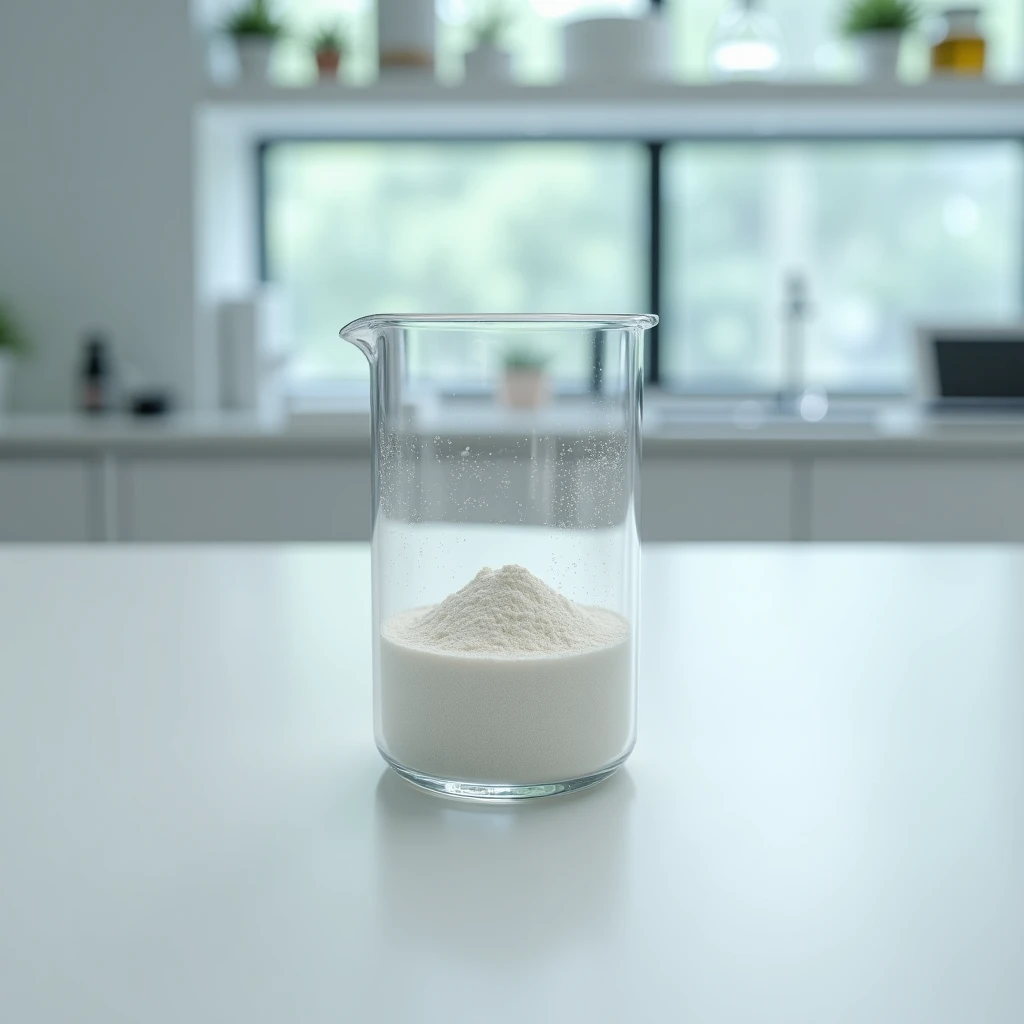
"Particle size reduction to approximately 20 micrometers significantly improves the dissolution rate and surface area of creatine monohydrate, though bioavailability endpoints remain comparable to standard formulations in most clinical protocols."
Jäger et al., Journal of the International Society of Sports Nutrition, 2011
Creatine monohydrate remains the most extensively studied ergogenic supplement in sports nutrition, with over 1,000 peer-reviewed publications demonstrating efficacy for strength, power, and lean tissue accretion. Despite this research foundation, questions persist regarding optimal delivery forms—particularly whether particle size reduction through micronization meaningfully enhances the compound's bioavailability and clinical performance.
Micronized creatine monohydrate underwent development based on the hypothesis that reduced particle diameter would improve dissolution kinetics, gastric tolerability, and ultimately tissue uptake. This research brief examines the evidence for micronization effects on creatine bioavailability, reviewing comparative pharmacokinetic data, solubility parameters, and clinical outcome measures across standard and micronized formulations.
What is Micronized Creatine?
Micronized creatine monohydrate represents a physical modification of standard creatine monohydrate in which the crystalline particles undergo mechanical processing to reduce mean diameter from approximately 80-200 micrometers to 20 micrometers or less. This particle size reduction increases the powder's total surface area by a factor of 10-20 without altering the molecular structure of the creatine molecule itself.
The micronization process typically employs jet milling or impact grinding under controlled temperature conditions to prevent degradation. The resulting powder exhibits different physical characteristics—finer texture, improved flowability, and altered suspension behavior in aqueous solutions—while maintaining identical chemical composition to non-micronized creatine monohydrate.
The term bioavailability in this context refers to the fraction of ingested creatine that reaches systemic circulation and ultimately accumulates in target tissues, primarily skeletal muscle. Bioavailability encompasses absorption efficiency from the gastrointestinal tract, hepatic first-pass metabolism, and cellular uptake mechanisms mediated by the creatine transporter (CrT, SLC6A8).
What is Micronized Creatine Used For?
Micronized creatine monohydrate serves the same primary applications as standard creatine monohydrate, with manufacturers positioning the micronized form as offering practical advantages in specific use contexts. Clinical and athletic applications include:
- High-intensity exercise performance: Supporting ATP regeneration during repeated bouts of maximal effort lasting 5-30 seconds, particularly relevant for resistance training, sprinting, and power-dependent sports
- Lean mass development: Facilitating intramuscular water retention and potentially supporting protein synthesis signaling pathways that contribute to hypertrophic adaptations
- Cognitive function: Providing substrate for brain creatine kinase systems involved in rapid energy buffering, with emerging evidence in sleep-deprived and vegetarian populations
- Muscle recovery: Supporting phosphocreatine resynthesis between training sessions and potentially attenuating markers of muscle damage
- Gastric tolerability: Marketed specifically for individuals reporting digestive discomfort with standard creatine formulations, though controlled evidence for this application remains limited
The primary theoretical advantage of micronization centers on improved dissolution characteristics, which manufacturers suggest may enhance mixing convenience and reduce undissolved sediment in beverages. Whether these physical properties translate to clinically meaningful differences in tissue uptake remains a central question in the bioavailability literature.
Evidence and Mechanisms
The bioavailability of creatine monohydrate—regardless of particle size—demonstrates consistently high absorption efficiency across multiple measurement approaches. Pharmacokinetic studies using plasma creatine concentration as a bioavailability marker show absorption rates exceeding 95% for standard formulations, leaving minimal theoretical room for improvement through formulation modifications.
Solubility represents the primary mechanical difference between micronized and standard creatine. In vitro dissolution studies demonstrate that micronized creatine reaches complete dissolution in aqueous solutions approximately 2-3 times faster than standard mesh creatine monohydrate. This enhanced dissolution results from the increased surface area-to-volume ratio: particles with 20-micrometer diameter present roughly 400% more surface area per gram compared to 80-micrometer particles.
A comparative analysis published in the Journal of the International Society of Sports Nutrition found no significant differences in plasma creatine concentrations, urinary creatine excretion, or muscle creatine content between micronized and standard creatine monohydrate following 28 days of supplementation at 5 grams daily.
The absorption mechanism for creatine occurs primarily in the proximal small intestine through a combination of passive diffusion and carrier-mediated transport. The creatine transporter demonstrates saturable kinetics, meaning absorption capacity has an upper limit regardless of how quickly the compound dissolves. At standard supplementation doses (3-5 grams), this transport system does not appear to represent a rate-limiting step for bioavailability.
Muscle uptake—the ultimate determinant of functional bioavailability—depends on the sodium-dependent creatine transporter and insulin-mediated facilitation rather than plasma concentration peaks. Studies measuring intramuscular total creatine content using magnetic resonance spectroscopy show equivalent accumulation rates between micronized and standard formulations when administered at matched doses over loading or maintenance protocols.
One theoretical advantage relates to gastric residence time. Poorly soluble particles may undergo delayed gastric emptying, potentially increasing exposure to acidic pH conditions that convert creatine to creatinine (the inactive degradation product). However, the clinical significance of this conversion remains questionable given the brief gastric transit time at physiological doses and the high stability of creatine at pH levels above 3.
| Parameter | Standard Creatine | Micronized Creatine |
|---|---|---|
| Particle Size | 80-200 μm | ≤20 μm |
| Dissolution Time (25°C) | ~45-60 seconds | ~15-20 seconds |
| Plasma Bioavailability | ~95-99% | ~95-99% |
| Muscle Uptake Efficiency | ~1-2% increase per day | ~1-2% increase per day |
A 2017 systematic review examining creatine formulation comparisons found insufficient evidence to conclude that micronization provides superior bioavailability outcomes compared to standard monohydrate when assessed through validated markers including plasma pharmacokinetics, muscle biopsy total creatine content, or performance endpoints. The review noted that dissolution kinetics do not consistently predict tissue-level bioavailability for highly permeable compounds like creatine.
The limited evidence for differential gastric tolerability deserves examination. While anecdotal reports suggest micronized formulations may reduce bloating or cramping, controlled trials comparing side effect profiles show statistically similar rates of gastrointestinal complaints between formulations. The proposed mechanism—that undissolved particles cause local irritation—lacks direct experimental support in the creatine literature.

Clinical Considerations
Athletes and Active Individuals
For individuals primarily concerned with ergogenic outcomes, the evidence suggests that micronized and standard creatine monohydrate produce equivalent performance benefits. Meta-analyses examining strength gains, sprint performance, and body composition changes show no formulation-dependent differences when total creatine dose and timing remain matched.
- Loading protocols (20 grams daily for 5-7 days) show identical muscle saturation kinetics between formulations
- Maintenance dosing (3-5 grams daily) produces equivalent long-term creatine retention
- Performance improvements in resistance training contexts (8-14% strength increases) do not differ by particle size
Individuals with Digestive Sensitivity
The hypothesis that micronization improves gastrointestinal tolerability remains primarily theoretical. While some users report subjective preference for micronized formulations, controlled trials do not demonstrate statistically significant differences in complaint rates.
- Bloating and cramping reports occur in approximately 5-7% of users regardless of formulation
- Symptoms typically associate with rapid loading protocols rather than particle characteristics
- Adequate hydration (additional 16-24 ounces of water daily) appears more influential for tolerability than particle size
Vegetarians and Low-Baseline Populations
Individuals with low baseline muscle creatine stores—particularly vegetarians and vegans who consume no dietary creatine—demonstrate the largest magnitude responses to supplementation. However, this enhanced responsiveness does not appear to interact with formulation type.
- Vegetarians show 20-40% greater muscle creatine accumulation compared to omnivores, regardless of particle size
- The creatine transporter upregulation in low-baseline populations likely maximizes absorption efficiency for any formulation
- Cost-effectiveness considerations favor standard monohydrate given equivalent outcomes at typically lower price points
Older Adults
Emerging research in aging populations examines creatine for sarcopenia prevention and cognitive support. Age-related reductions in creatine transporter expression theoretically could create scenarios where dissolution kinetics matter, but current evidence does not support formulation-specific recommendations.
- Studies in adults over 60 use predominantly standard monohydrate with consistent efficacy for strength and functional outcomes
- Doses of 5-10 grams daily combined with resistance training show benefit for muscle mass preservation
- No published trials directly compare micronized versus standard formulations in older populations
How to Choose Micronized Creatine
Selection criteria for creatine monohydrate should prioritize evidence-based factors over marketing claims regarding absorption enhancement. The following considerations reflect the current research landscape:
- Purity verification: Look for products listing creatine monohydrate content at ≥99.5% with third-party testing for contaminants including creatinine, dicyandiamide, and heavy metals. Manufacturing standards matter more than particle size for safety and efficacy.
- Micronization specification: If choosing a micronized product, verify that particle size reduction to ≤20 micrometers is documented through manufacturer specifications. Unsubstantiated micronization claims appear in products without actual particle size modification.
- Formulation simplicity: Avoid products combining creatine with proprietary blends, undisclosed absorption enhancers, or excessive additives. The compound requires no cofactors beyond adequate carbohydrate intake (30-50 grams) to optimize insulin-mediated muscle uptake.
- Cost per serving analysis: Calculate cost per 5-gram serving rather than per container. Micronized products typically command 15-40% price premiums; evaluate whether practical mixing advantages justify higher costs given equivalent bioavailability.
- Dissolution preference: If subjective mixing quality significantly affects compliance, micronized formulations offer tangible advantages in reducing sediment and improving suspension characteristics, particularly in cold beverages or shaker bottles.
Conclusion
The evidence examining micronized creatine bioavailability reveals a consistent pattern: while particle size reduction demonstrably improves dissolution kinetics and physical handling characteristics, these changes do not translate to superior absorption, muscle uptake, or clinical outcomes compared to standard creatine monohydrate. Pharmacokinetic studies, muscle biopsy analyses, and performance trials show equivalent bioavailability across formulations when assessed through validated markers.
This equivalence reflects the already high absorption efficiency of standard creatine monohydrate and the mechanistic reality that tissue uptake depends on transporter-mediated processes rather than dissolution speed. For individuals prioritizing evidence-based supplementation, micronized formulations offer practical advantages in mixing convenience but should not be selected based on bioavailability claims. Standard creatine monohydrate remains the reference formulation with the most extensive safety and efficacy database spanning over three decades of clinical research.
Holistic Nutrition's Micronized Creatine Monohydrate is formulated to the standard outlined in this brief — single-ingredient, micronized, third-party tested.
View the product →This article is part of the Holistic Nutrition Research Library. Browse all research briefs and ingredient factsheets.
References
[1] Jäger R, Purpura M, Shao A, Inoue T, Kreider RB. Analysis of the efficacy, safety, and regulatory status of novel forms of creatine. Amino Acids. 2011;40(5):1369-1383.
[2] Kreider RB, Kalman DS, Antonio J, et al. International Society of Sports Nutrition position stand: safety and efficacy of creatine supplementation in exercise, sport, and medicine. J Int Soc Sports Nutr. 2017;14:18.
[3] Buford TW, Kreider RB, Stout JR, et al. International Society of Sports Nutrition position stand: creatine supplementation and exercise. J Int Soc Sports Nutr. 2007;4:6.
[4] Harris RC, Söderlund K, Hultman E. Elevation of creatine in resting and exercised muscle of normal subjects by creatine supplementation. Clin Sci (Lond). 1992;83(3):367-374.
[5] Deldicque L, Décombaz J, Zbinden Foncea H, et al. Kinetics of creatine ingested as a food ingredient. Eur J Appl Physiol. 2008;102(2):133-143.
[6] Persky AM, Brazeau GA. Clinical pharmacology of the dietary supplement creatine monohydrate. Pharmacol Rev. 2001;53(2):161-176.
[7] Spillane M, Schoch R, Cooke M, et al. The effects of creatine ethyl ester supplementation combined with heavy resistance training on body composition, muscle performance, and serum and muscle creatine levels. J Int Soc Sports Nutr. 2009;6:6.
[8] Greenwood M, Kreider RB, Melton C, et al. Creatine supplementation during college football training does not increase the incidence of cramping or injury. Mol Cell Biochem. 2003;244(1-2):83-88.
Leave a comment