

Creatine or Protein: Which Is Better for Muscle Growth and Performance?
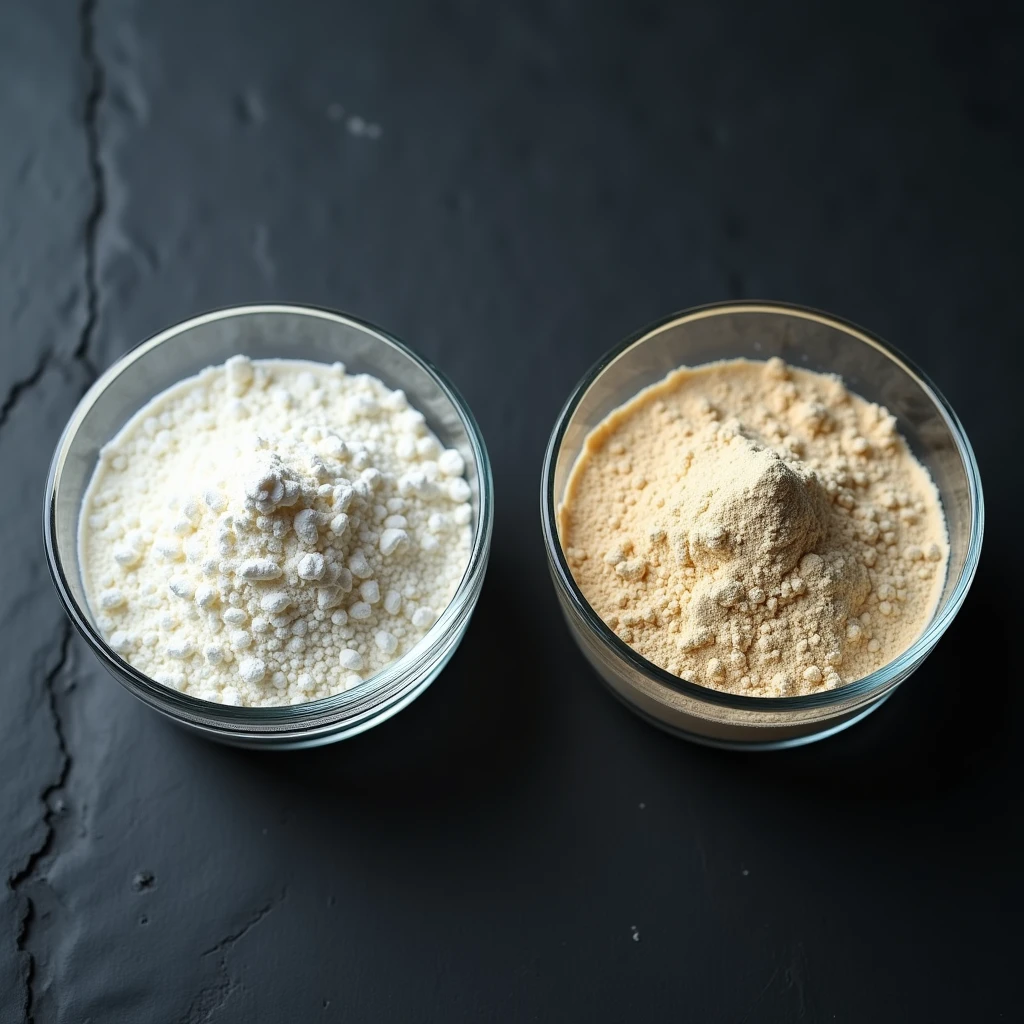
"The combination of protein supplementation and creatine monohydrate during resistance training results in greater gains in fat-free mass and muscle strength than either supplement alone."
Burke et al., Journal of the International Society of Sports Nutrition, 2008
The question of whether creatine or protein is "better" reflects a fundamental misunderstanding of how these compounds function in human physiology. This comparison appears frequently in supplement discussions, yet the premise itself is flawed—comparable to asking whether oxygen or glucose is more important for cellular energy production.
Both creatine and protein supplementation have substantial evidence bases supporting their efficacy, but they operate through entirely different mechanisms and address separate physiological needs. Understanding these distinctions allows for evidence-based decision-making rather than binary choices that may compromise training outcomes. This review examines the documented effects of each supplement, their mechanisms of action, and the populations most likely to benefit from one, both, or neither.
What Are Creatine and Protein?
Creatine is an endogenous compound synthesized primarily in the liver from three amino acids: arginine, glycine, and methionine. Approximately 95% of the body's creatine stores reside in skeletal muscle tissue, where it exists as free creatine and phosphocreatine. The average 70-kilogram adult maintains approximately 120 grams of total creatine, with daily turnover of roughly 1-2% requiring replacement through endogenous synthesis and dietary intake. Creatine monohydrate supplementation increases intramuscular creatine stores by approximately 10-40% above baseline levels [1].
Protein represents a macronutrient composed of amino acid chains essential for virtually all biological processes. Unlike creatine, protein cannot be synthesized de novo from non-protein precursors—the body requires dietary protein to obtain the nine essential amino acids it cannot manufacture. Skeletal muscle contains approximately 50-75% of total body protein, which undergoes continuous breakdown and resynthesis at a rate of roughly 1-2% daily. Protein supplementation provides concentrated amino acids to support this turnover, particularly during periods of increased demand such as resistance training [2].
The critical distinction: creatine functions as an ergogenic aid that enhances energy availability during specific types of exercise, while protein serves as a structural building block and regulatory molecule. Creatine supplementation addresses energy metabolism; protein supplementation addresses amino acid availability. These are not interchangeable functions.
What Is Creatine Used For?
Creatine supplementation has demonstrated efficacy primarily in activities requiring rapid energy regeneration—specifically, high-intensity efforts lasting approximately 1-30 seconds. The phosphocreatine system provides immediate ATP resynthesis during explosive movements before glycolytic and oxidative pathways become predominant energy sources.
- Resistance training performance: Meta-analyses show creatine supplementation increases repetitions to failure by 5-15% and total training volume by 5-10% compared to placebo, with effects most pronounced in sets of 6-12 repetitions [3]
- Sprint and power output: Improvements of 1-5% in repeated sprint performance and single-effort maximal power output, with greater effects observed in trained versus untrained populations [4]
- Muscle hypertrophy: Indirect support through enabling higher training volumes; typical gains of 0.8-1.4 kg additional lean mass over 4-12 weeks when combined with resistance training versus training alone [5]
- Cognitive function: Emerging evidence suggests potential benefits for tasks requiring short-term memory and rapid processing, particularly under metabolic stress or sleep deprivation, though effects are less consistent than performance outcomes [6]
Creatine does not directly stimulate muscle protein synthesis, does not provide amino acids for tissue construction, and shows minimal ergogenic benefit for continuous endurance activities beyond 90 seconds in duration. Its value lies exclusively in enhancing the capacity to perform high-intensity work.
What Is Protein Used For?
Protein supplementation serves to meet daily amino acid requirements, particularly the approximately 1.6-2.2 grams per kilogram body weight associated with optimal muscle protein synthesis rates in resistance-trained individuals—substantially higher than the 0.8 g/kg RDA established for sedentary populations [7].
- Muscle protein synthesis: Provides leucine and other essential amino acids required to activate mTORC1 signaling and initiate translation; approximately 20-40 grams of high-quality protein maximally stimulates synthesis per feeding episode [8]
- Recovery and adaptation: Supports repair of exercise-induced muscle damage and facilitates adaptive responses to training stress; protein intake within several hours of resistance exercise optimizes net protein balance [9]
- Body composition during caloric restriction: Higher protein intakes (2.3-3.1 g/kg) during energy deficits preserve lean mass while promoting fat loss, compared to lower intakes where muscle catabolism contributes substantially to weight reduction [10]
- Satiety and metabolic support: Protein demonstrates the highest thermic effect of feeding (20-30% of calories consumed) and greatest satiety per calorie compared to carbohydrates or fats, supporting adherence to energy-controlled diets [11]
Unlike creatine, which targets a specific metabolic pathway, protein addresses fundamental nutritional requirements. The question is not whether protein is beneficial, but whether supplementation is necessary to achieve intake targets that whole foods could theoretically provide.
Direct Comparison: Evidence and Mechanisms
The most methodologically sound approach to comparing creatine and protein examines head-to-head trials where participants receive one supplement, the other, both, or placebo while following identical training protocols. Burke and colleagues conducted such a study in resistance-trained men, finding that the combination of whey protein and creatine monohydrate produced significantly greater increases in lean tissue mass and bench press strength than either supplement alone over 10 weeks [1]. The protein-only group gained muscle mass comparable to placebo, while the creatine-only group showed strength improvements but minimal additional hypertrophy beyond training effects. The combination group demonstrated additive benefits.
These findings align with the distinct mechanisms of action. Creatine enhances acute training capacity—the ability to complete additional repetitions or sets—which creates a greater hypertrophic stimulus over time. Protein provides the amino acid substrates required to realize that stimulus through actual tissue construction. Without adequate protein, increased training volume cannot translate to proportional muscle growth. Without creatine, training capacity may be suboptimal, limiting the stimulus that protein can support.
Holistic Nutrition's Micronized Creatine Monohydrate is formulated to the standard outlined in this brief — single-ingredient, micronized, third-party tested.
View the product →This article is part of the Holistic Nutrition Research Library. Browse all research briefs and ingredient factsheets.
Leave a comment